
Hackleton WEB Group Prairie-style planting **updated**
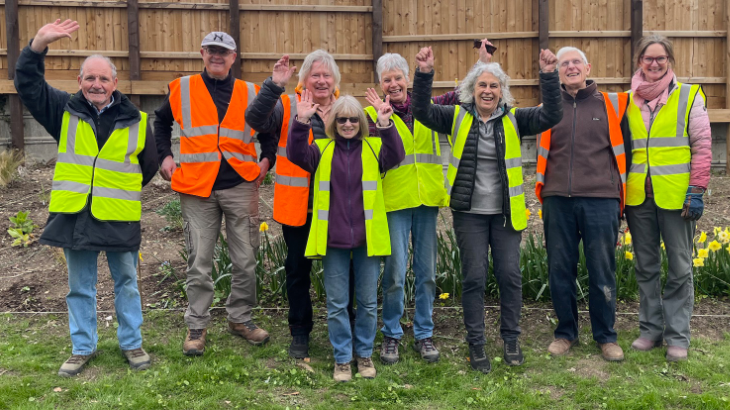
We are grateful to Roy Hawkesford of Hackleton Wildlife, Environment & Biodiversity (WEB) for allowing us to reproduce this article, originally published in the parish magazine. This project is a great example of communities working together to improve their neighbourhood for both people and nature.
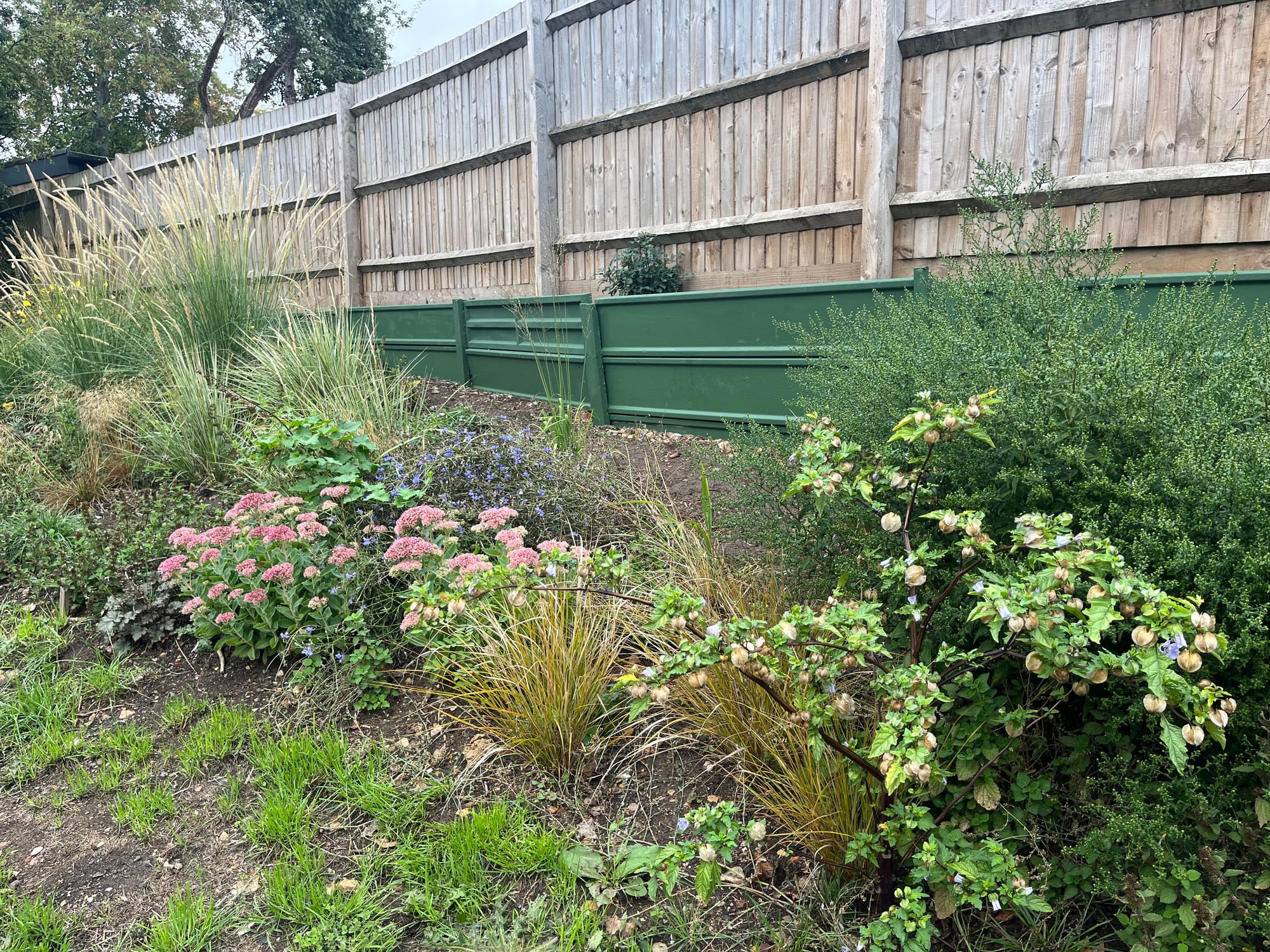
**Update ** This article was first published in May 2026. In September following a very challenging summer Roy Hawkesford reported that the planting survived the heat and drought, as these photos show.
Hackleton WEB have planted more perennials in gaps left by the drought, and painted the 45m cement wall at the back. Roy says "We didn’t lose many plants over the summer, which is a tribute to the design as well as the care of the WEB Group members. All it needs now are some hollyhocks at the back and some grass seed along the front strip…"
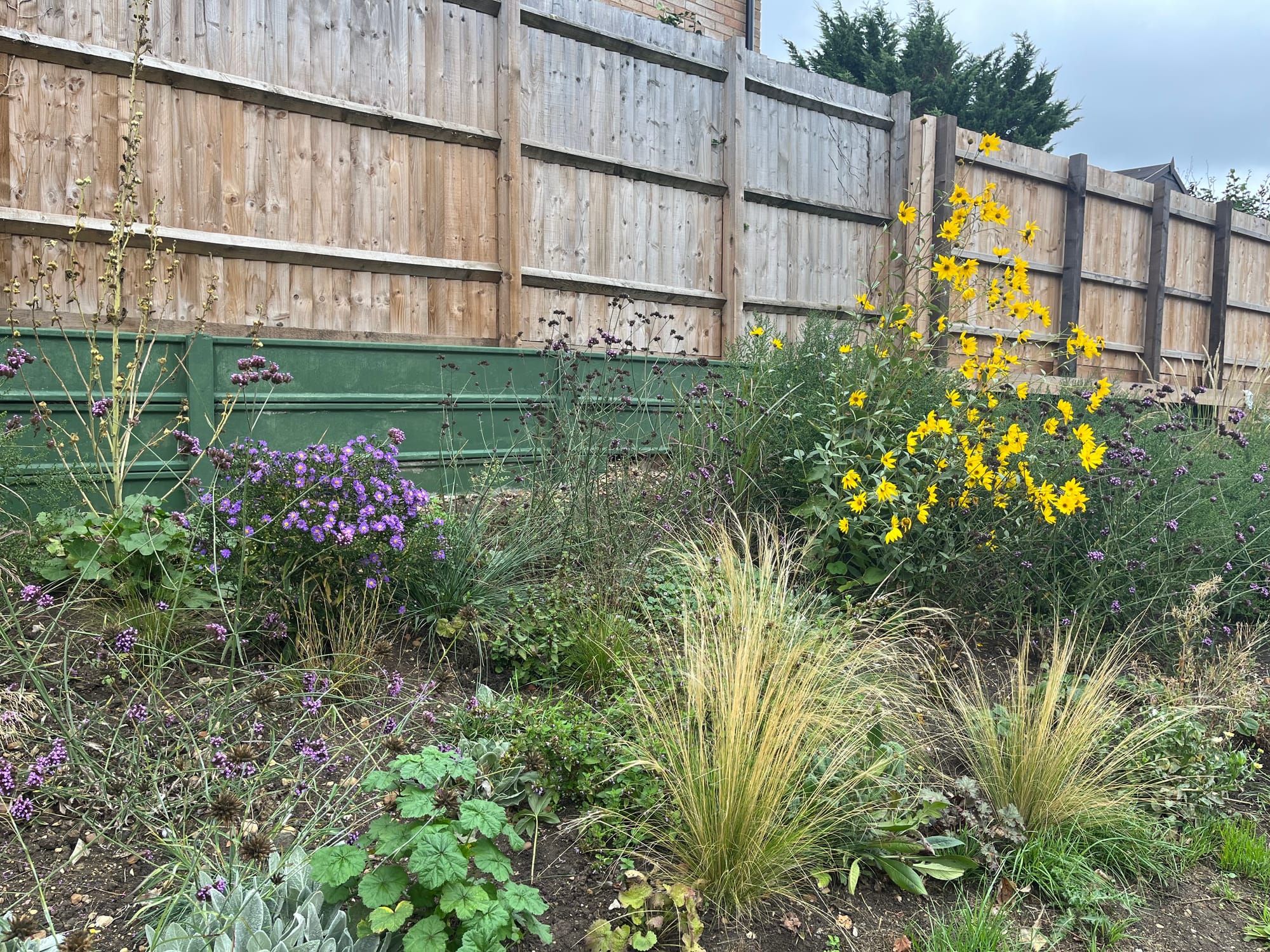
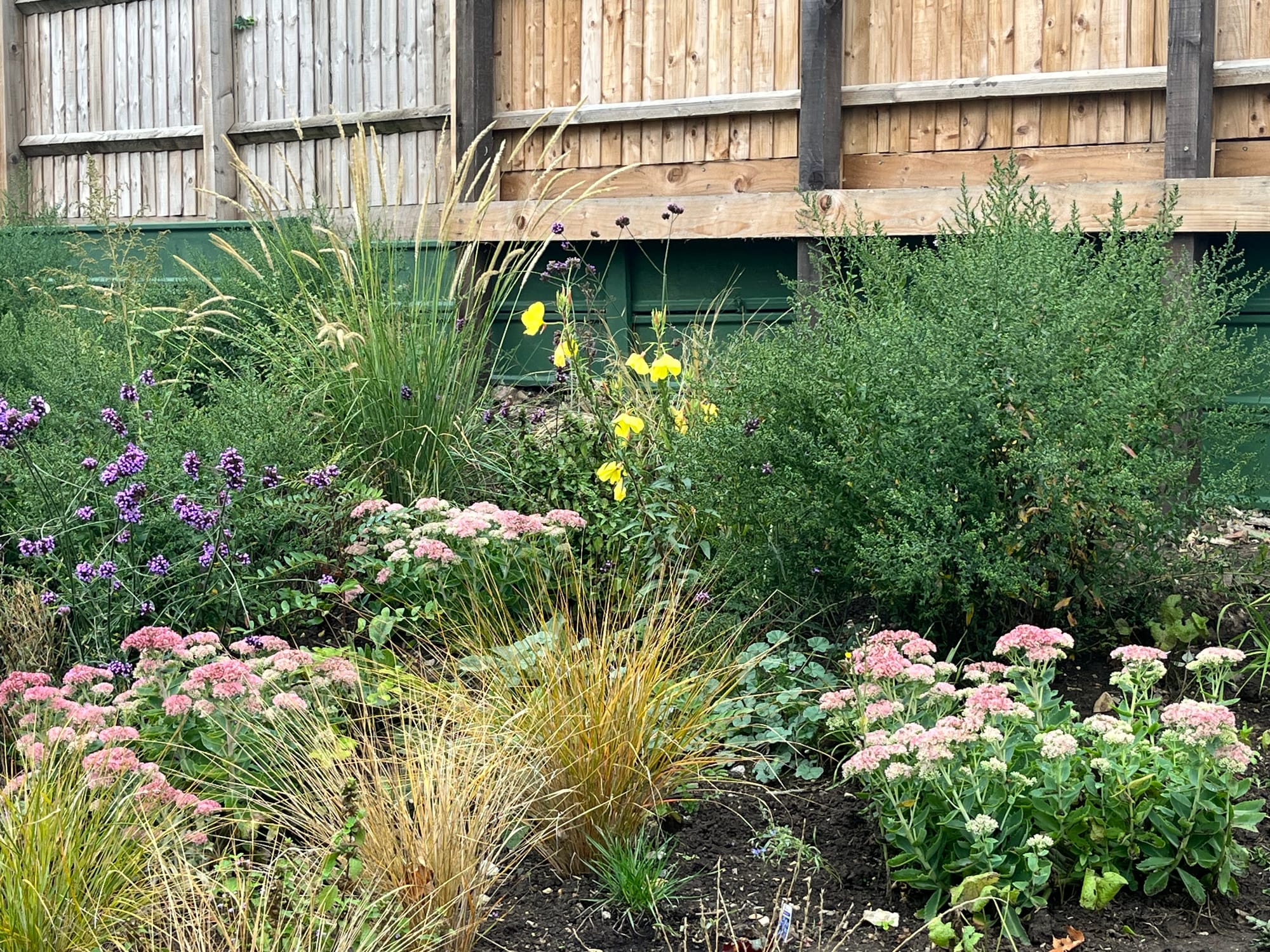
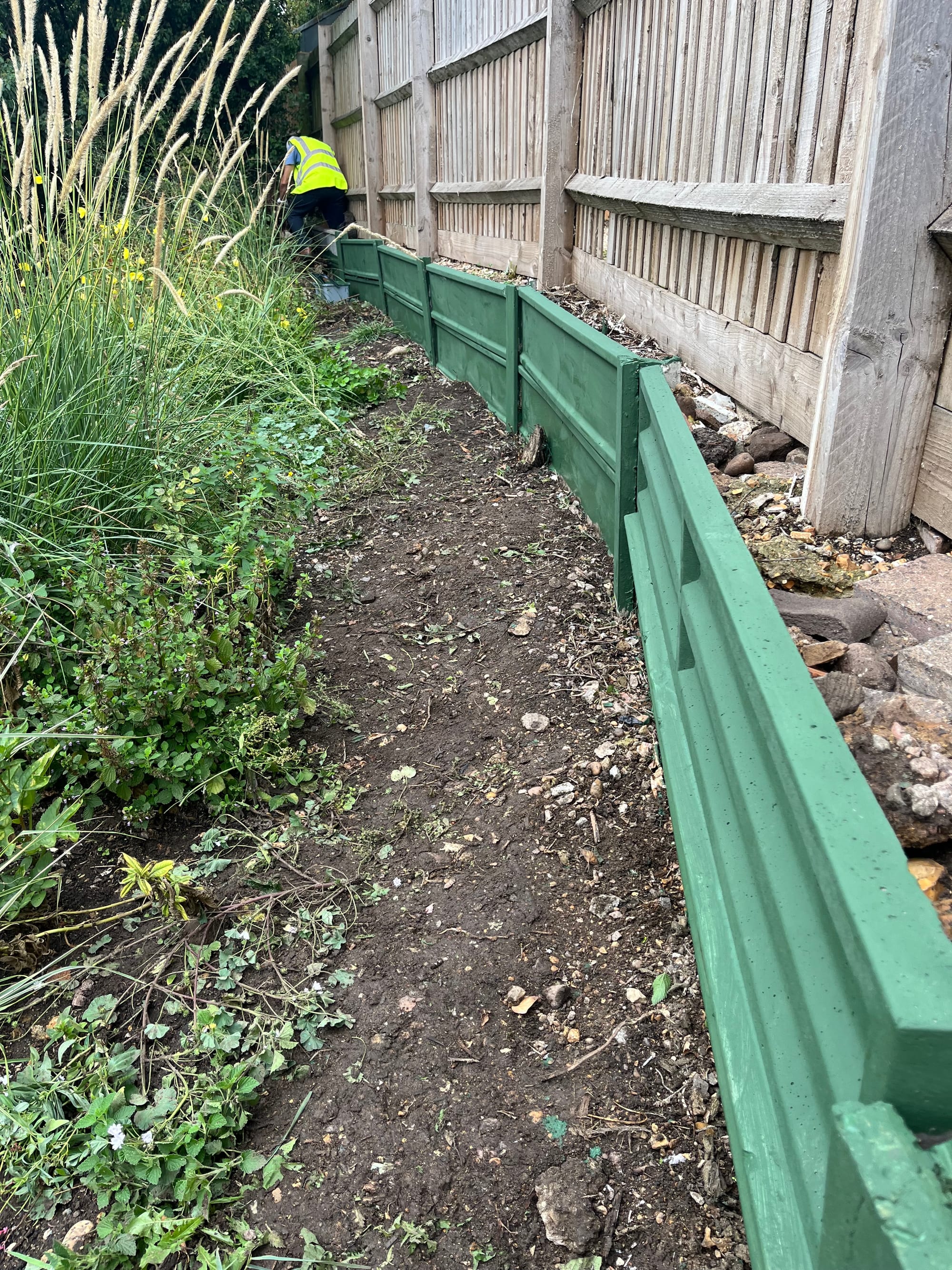
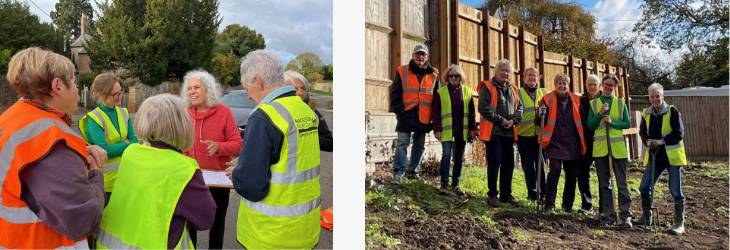
Hackleton residents may have noticed a group of volunteers, wearing Hackleton Parish Council hi-vis jackets, working on a 38 x 5 metre strip on Main Road.
The WEB group has been working on the plot since last autumn, clearing building rubble, stones and roots, and preparing it for planting. A successful grant application was submitted to Veolia for £1,000 for plants, and the plan was supported by the parish council.
When the site became available, it was suggested that the WEB Group might be interested in tackling it as a response to WNC’s draft Local Nature Recovery Strategy. This was an opportunity for the group to turn theory into practice, to use their collective skills, and to benefit wildlife and biodiversity while providing an attractive feature in Hackleton. Our hope was that it would encourage the community to be more aware of what could be achieved – how a recovery project could be good for nature as well as good to look at.
We discussed various ways of planting and decided that the most suitable one was Prairie Style Planting. You can google this and find out lots more about it online, but, in essence, it is a sustainable, natural looking method of using ornamental grasses as the core, interplanted with nectar rich biennial and perennial flowers, providing colour and an all-year round habitat for biodiversity.
Although the aim is for a natural appearance, the design is quite scientific and based on a matrix system in which plants are grouped in a grid according to height, size, colour and when they are in bloom. Grasses are good because they can live in fairly poor soil and are attractive all year. Below is a an example of how one of the five 6 x 2.5 metre beds would be laid out.
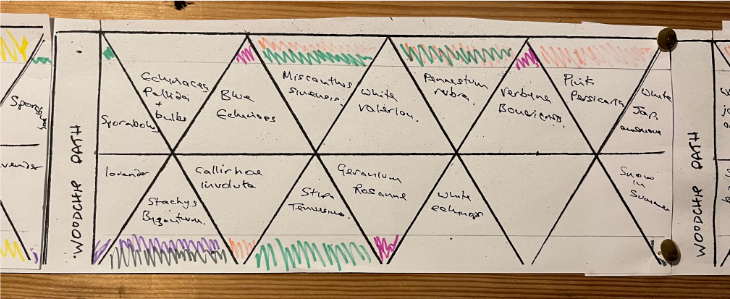
Because it is a long narrow plot, we decided, for maximum impact, beds 1 & 5 would mirror each other with yellow and white plants among the grasses, likewise 2 & 4 with pinks, blues, purples and white, and 3 as the central focal point with the same colour plants as 2 & 4 but containing some of the more spectacular grasses. All of the plants will have single flowers, to make them accessible to pollinators, and will flower at different times of the year to maximise the food available for bees and butterflies.
Because we were keen to show the public that work was being carried out and to stimulate awareness and discussion, we took advantage of the offer of 300 daffodil bulbs and planted them at the front of the ‘yellow’ beds (1 & 5).
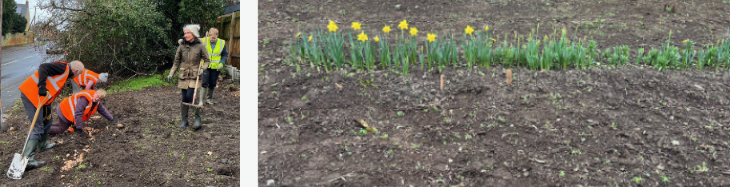
After three months, we were ready to tidy up the plot in preparation for planting. The Parish Council arranged for the first two metres to be grass seeded, to act as border and to protect the plants when in situ.
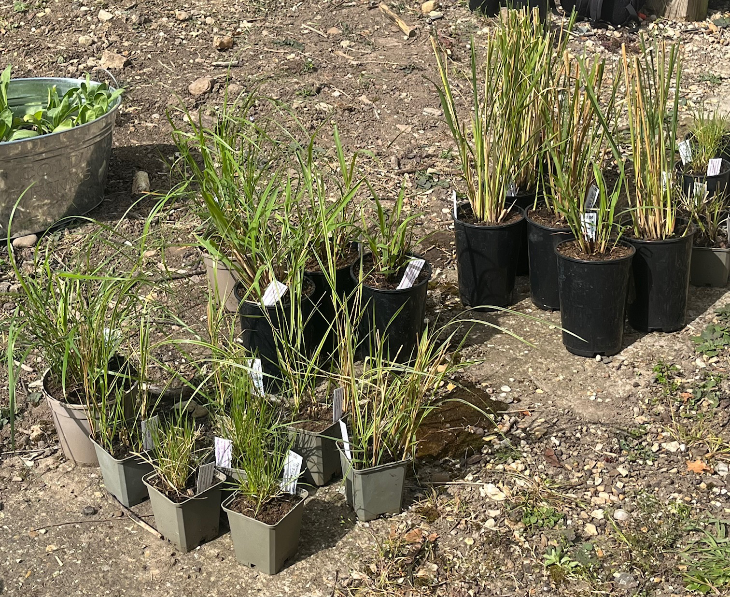
When the ground was not so wet and the grass had begun to look sufficiently robust, we convened on Friday, April 10th to begin planting not only the 112 grasses but also other plants which had been donated by local people to fit in with the planting scheme. We decided that five sessions would be needed to complete the task, especially as the ground was quite hard.
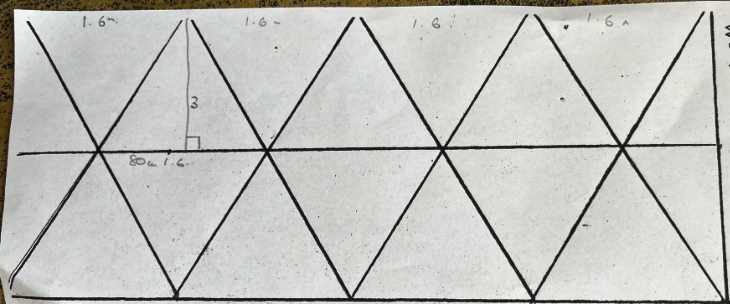
The purpose of the lozenge shapes is to avoid the appearance of straight lines, basically to ‘mask’ the fact that is heavily designed, and to look more natural after a year or so.
To avoid chaos, it was agreed to follow the layout in each matrix, and over the next four sessions, the team of amazing volunteers laid out, then dug, holes for the plants. We were fortunate that a member of the group, who lives opposite the plot, allowed us to fill watering cans in an endless supply chain!
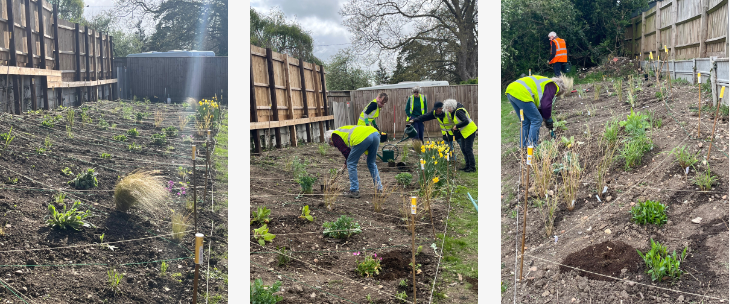
Because the plot is on a slope and is south facing, we will continue to water until the plants are reasonably well established, though prairie-style planting is suited to such a plot. One of the main reasons we chose it was that grasses and the plants we decided on are relatively low-maintenance perennials.
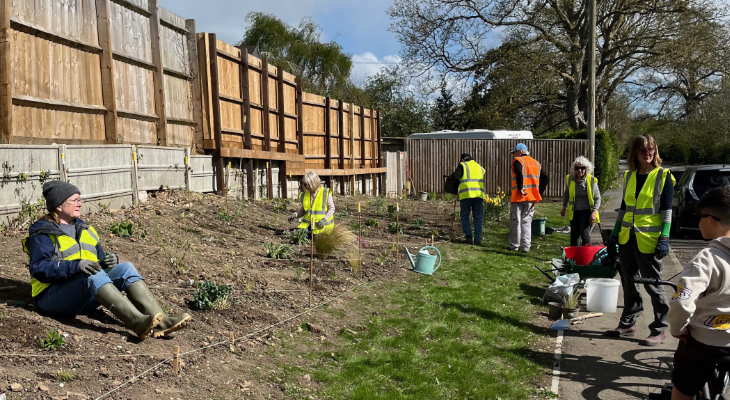
As with all gardening projects, the job is never ‘done’. The group will continue to maintain and develop it over time, to show what can be achieved by volunteers for the community as a whole and, importantly, for wildlife, the environment and biodiversity.
It was gratifying to receive well over a hundred thumbs-up from the photos I put on the Hackleton Parish Community Group Facebook page during the final sessions on the plot. Thank you all for supporting us.
All of the members of the WEB group involved in the project deserve a mention:
Pauline, Helen H, Hillary, Alan, Barbara, John, Diane, Claude, Helen S, Anton, Katy, Mark and me – as well as Arun and Shyaam (from the French Partridge). I also acknowledge the support of Hackleton Parish Council and Veolia.
If you would like more information on the project and/or the other activities and aims of the WEB Group, please contact royhawkesford@gmail.com