
It's Your Neighbourhood
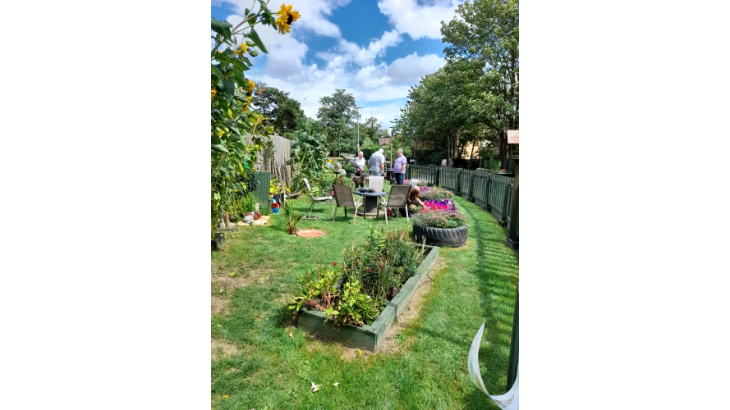
Although I'm writing in November, no one will have forgotten the colourful displays of summer flowers we all enjoy so much each year around Northampton town.
The flowers are for Northampton Town Council’s entry to the annual, national Britain in Bloom competition, supported by the Royal Horticultural Society (RHS). The competition aims to encourage gardening in its broadest sense to transform communities and urban areas: from sowing wildflower seeds on verges to growing fruit and vegetables in tubs or on balconies to tree planting. Community groups entering the regional version of Britain in Bloom – East Midlands in Bloom (EMiB), enable the town to be judged as a whole. In July the competition culminated in a bus tour for the RHS judges around the parks and gardens and individual projects. Tour stops included St. Giles Churchyard, Billing Road Cemetery restoration project, Bradlaugh Fields and the gardens developed by the Hindu Welfare Organisation on Booth Lane South. The RHS judges awarded the Town Council a silver award for its work in developing green space in the town for its residents.
All congratulations to Louise Hanman-Jones, Nicole Haviland and Julie Thornycroft for their hard work which has culminated in this wonderful achievement for Northampton Town Council.
As part of EMiB, a more local community-based project, again backed by the RHS is the ‘It’s Your Neighbourhood’ project1. In this case any individual or group can enter and will be assessed for their own particular achievement and not against any other entry. The three assessment criteria are: degree of local community engagement with the project; the responsibility taken for the wider environment such as litter picking; and the achievement in gardening or horticulture.
This summer I had the pleasure and privilege of working as an RHS assessor on a number of It’s Your Neighbourhood projects within Northampton.
Despite being a well-established project, its take-up is increasing as communities understand the importance of green space and the benefits of coming together to improve their local environments.
Throughout the assessment process, I met some truly inspiring individuals who have become leaders of their project groups and are instrumental in engaging with often unlikely others. I have met teachers dedicated to supporting students with difficulties through gardening and construction, and in so doing have developed their own knowledge of biodiversity as their students have. I have met teams of volunteers who take personal pride in maintaining tidy areas for the public and who repair any damage caused by incidences of vandalism because they believe that a park is for everyone. I have met community groups whose names I had not heard of. Everyone taking part seemed instinctively to understand the importance of working with Nature. There was so much evidence of action that brought learning and the motivation to continue.
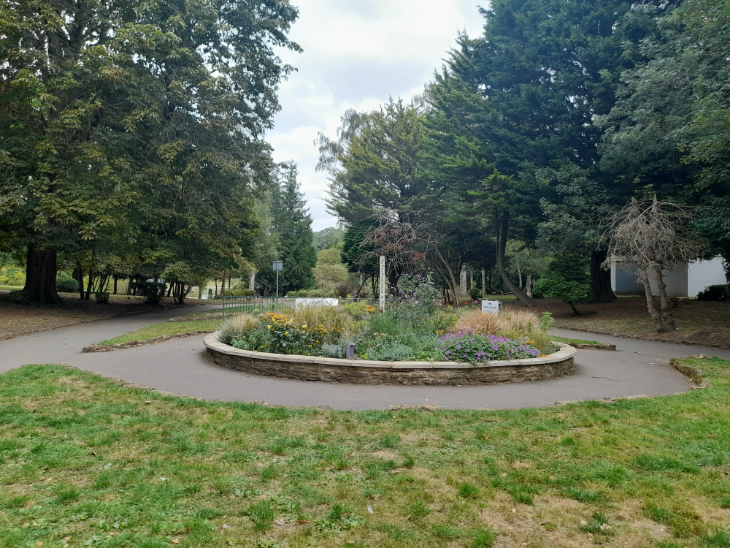
Inspirational examples
A community garden replaced a walled and paved patio area for residents living in a social housing complex. An enterprising woman began planting pots with annuals initially but has since learned of the need for perennial planting for insect pollination. She was supported by neighbours and the patio scheme expanded with donated seating and by building raised beds for perennial planting of flowers, herbs and vegetables. She had contacted Northampton Partnership Homes who supported her use of the patio for the creation of a community garden.
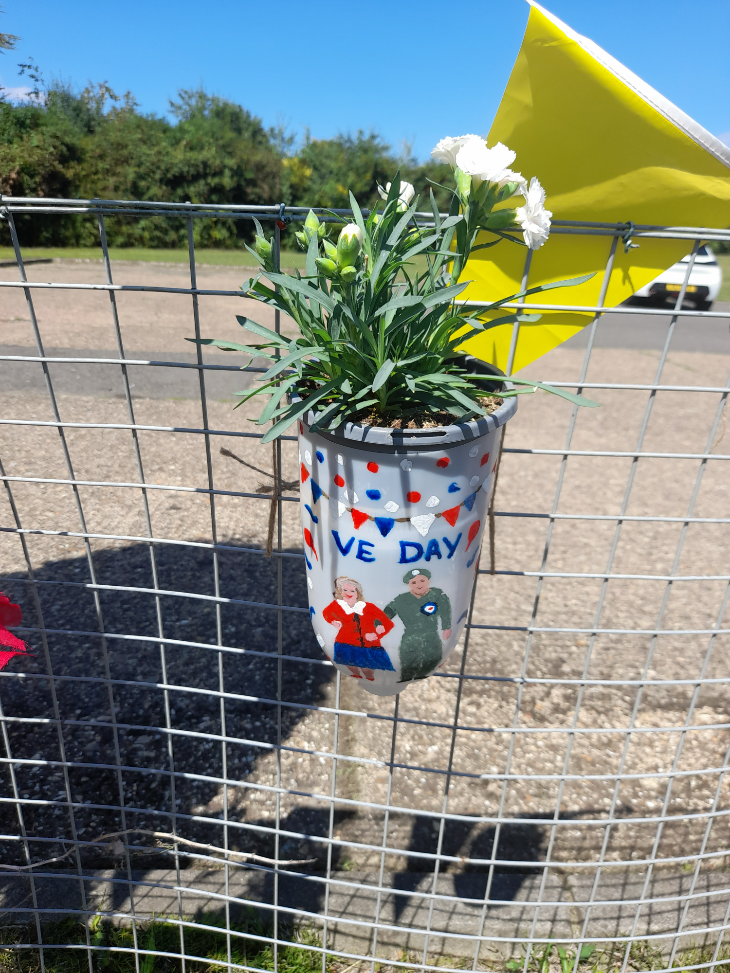
It is astonishing how creativity has been applied to the ‘greening’ of even the smallest of spaces. Recycled materials such as pallets and tyres, sometimes painted, have been used to create raised beds, while old fence panels protect young saplings. ‘It’s Your Neighbourhood’ elevates surprising leadership talent from residents who, with a personal vision, can inspire others. People will donate time and resources, as their understanding grows of the benefits to all of one person’s vision.
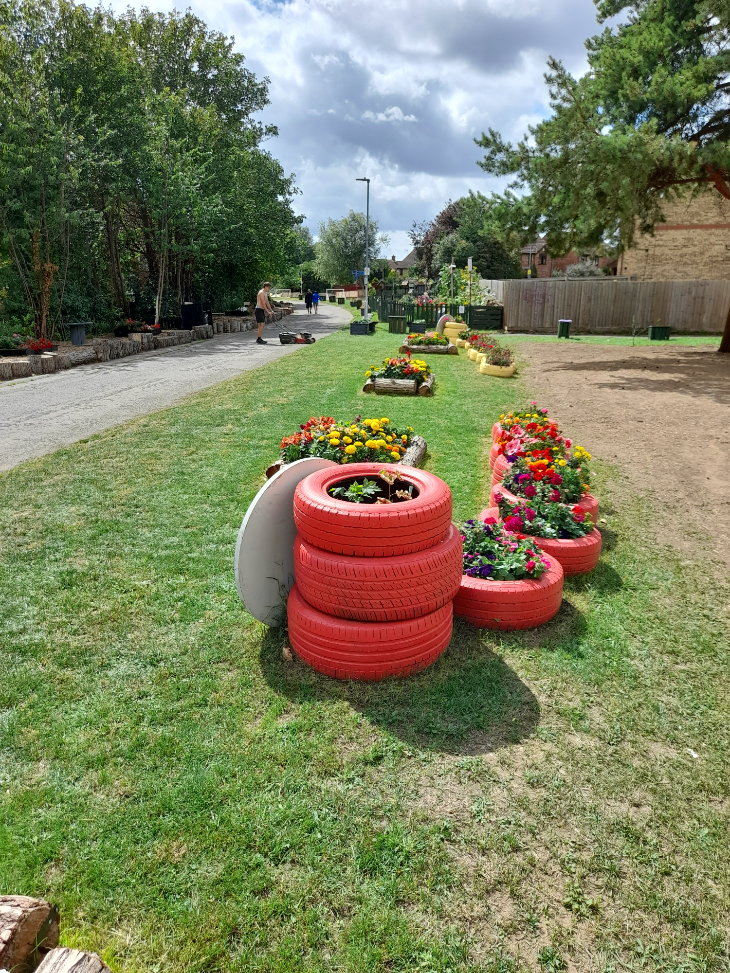
Such projects can elicit the eccentric. I came across a non-conformist visionary who began to build raised beds out of ‘anything’, adding soil, plants and vegetables and providing seats within a white-painted boundary fence.
Another group used textile and artwork to illustrate different species of birds as a means of educating visiting children.
‘Friends of Park’ groups see the potential of different areas within their park for tree planting or rewilding or enabling the regeneration of old spinneys and the Victorian iron-work of the boundary fences. Our park rangers work really hard to supervise and can be contacted for advice on larger projects within the parks.
As a note of caution, it is important to access the proper channels in planning garden schemes of any sort or in identifying suitable green space. Ownership of the land and below-ground infrastructure are important considerations. Local councillors or Northampton Town Council ‘Bloom staff’ can be contacted for permissions and advice.
The ‘It’s Your Neighbourhood’ project is very powerful. It not only stimulates community cohesion but also provides a learning framework; “we care more about what we know”, and that generally is our neighbourhood.
Next year Northampton Town would like to see an even bigger 'It’s Your Neighbourhood’ take up. Apply in April 2026 for assessment in late June/early July.
Have a look at the website and get in touch with your Town Council.